Showing posts with label Church. Show all posts

Saturday, May 24, 2014

The Father God (Pt. 5)

Yet there is a question that needs to be asked, what happens when the fatherly nature of God is not taught, and more, taken away from him? What are some of the resounding issues that are confronted when the fatherly nature of God is removed from him and is not taught or, even, the opposite is taught? Would culture see these changes or would it just be in the religious regions that the waves would reach?

It would seem that culture would not just see the waves of this change, but would also be shocked by the changes it brings on within culture. For something interesting occurs when you strip God of his Fatherly nature. He becomes it and it becomes impersonal and impersonal becomes impartial and impartial becomes careless and careless becomes graceless and graceless becomes meaningless - meaningless to the point of irreverence and disregard. So much so that culture uses his name as a byword and a curse.

Culture has steadily and slowly attempted at removing God’s personal qualities, especially that he is Father. And Christianity is now, yes, even now, seeing the outcomes of those slow and steady cultural modifications to cultural Christian understandings of the Fatherly nature of God. The modern day fight of the lesbian, gay, bisexual, transgendered (LGBT) movement for cultural standing and inclusion is part and portion of the degenderization of the society at large which is an outcome of removing God’s Fatherly nature from his personality. It is also part of the reason for such drastic issues with out of wedlock pregnancies and fatherless children[1] as well as the astounding 56 million abortions that have legally happened since Roe V. Wade.

Statistic after statistic point to the rampant issue of fatherless homes within America and the subsequent issues faced by those children who are forced to grow up within a fatherless home. These subsequent issues are not simply the issues of the children growing up in fatherless homes but are also an issue of the culture at large.[2]

Removing God’s Fatherly nature from the written Word, from our modern understanding of God, and our cultural understand of Christianity has done nothing in the way of help for the American economy as well as for our children or our future. It is safe to argue that homosexuality is not an economically sound decision because economics is based on buying units, of which, homosexuals do not produce because they cannot reproduce. The same can be said for abortion; on an economic point 56 million buying units have been lost thus far, which is both dollars not being used but also jobs not being created or sustained by one, if not all, of those 56 million.[3] And statistically speaking a child born out of wedlock is more likely to live life on welfare than one born in a traditionally married family and thus this is a burden on the economy because a non-producing unit is only consuming. [4]

But God is Father and father he remains. He is Father because he has revealed himself as such. He has spoken clearly of who he is in his Word, therefore we see him not as impersonal, impartial and unimportant; no, we see him as personal, partial and vastly important and this changes everything.

The Fatherly nature of God is confessed in the original Christian confession of Baptism as well as the foundational Christian Creeds. It is radically important to both recognize and believe in God’s Fatherly nature for in so doing one rightly see God as he is Father, Son and Spirit, not mother or degenderized. The importance of seeing God as Father is necessary to one’s Christian faith, for to be Christian is to be a child of God the Father.


[1] U.S Fatherless Statistics. http://fatherhoodfactor.com/us-fatherless-statistics/ (Accessed April 29, 2014)
[2] Stephen Baskerville (2002). The Politics of Fatherhood. Political Science & Politics, , pp 695-699. doi:10.1017/S1049096502001191.
[3] Data and Statistics . http://www.cdc.gov/reproductivehealth/data_stats/. (Accessed April 29, 2014)
[4] U.S. Fatherless Statistics. http://fatherhoodfactor.com/us-fatherless-statistics/ (Accessed April 29, 2014)
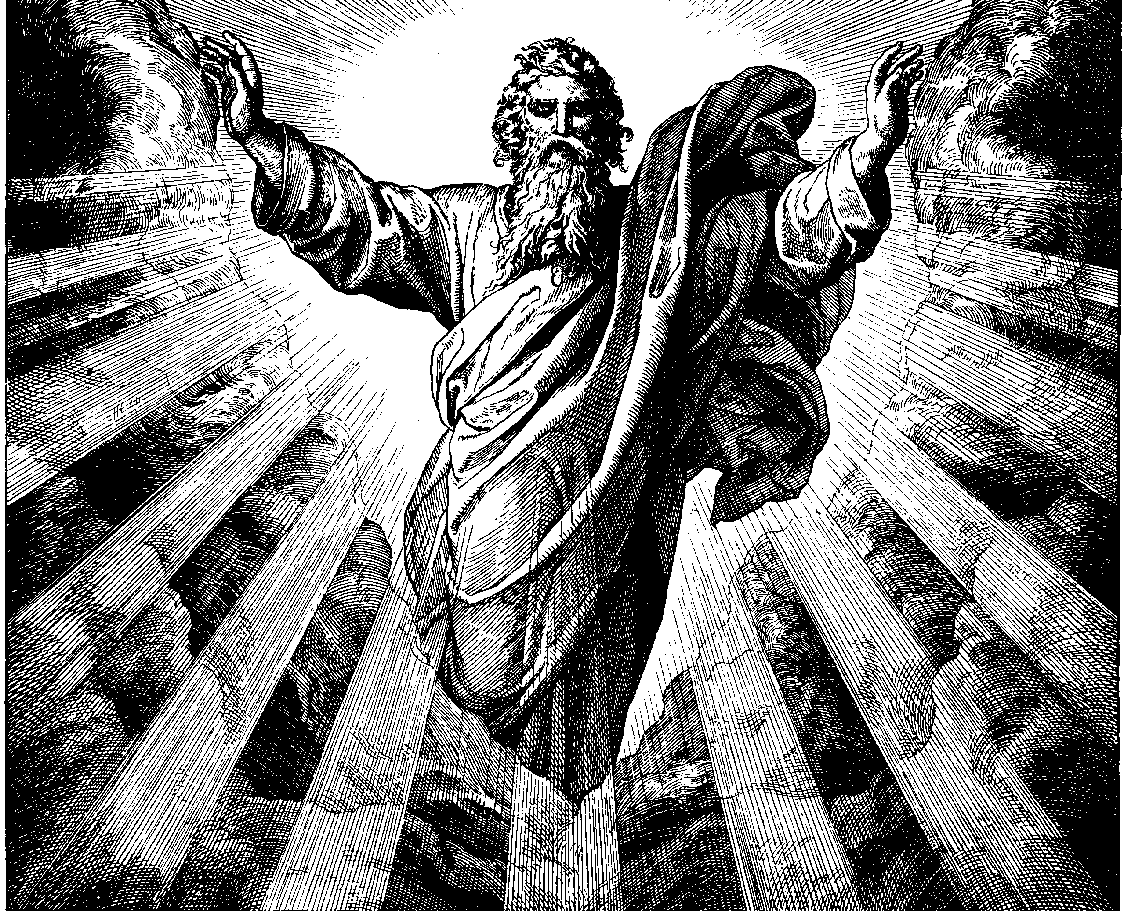
photo credit: http://teamorthodoxy.files.wordpress.com/2012/02/god-the-father.jpg

Friday, May 23, 2014

The Father God (Pt. 3)

Another creed, which bears witness to the Fatherly nature of God, is the Athanasian Creed. Dealing with, almost in its entirety, the Trinity, this creed develops further what it means that God is Father. It is important to note the way this particular creed develops the person of the Father by simultaneously developing the persons of the Spirit and Son.

“Whosoever will be saved, before all things it is necessary that he hold the catholic faith; which faith except every one do keep whole and undefiled, without doubt he shall perish everlastingly. And the catholic faith is this: That we worship one God in Trinity, and Trinity in Unity; neither confounding the persons nor dividing the substance. For there is one person of the Father, another of the Son, and another of the Holy Spirit. But the Godhead of the Father, of the Son, and of the Holy Spirit is all one, the glory equal, the majesty coeternal. Such as the Father is, such is the Son, and such is the Holy Spirit. The Father uncreated, the Son uncreated, and the Holy Spirit uncreated. The Father incomprehensible, the Son incomprehensible, and the Holy Spirit incomprehensible. The Father eternal, the Son eternal, and the Holy Spirit eternal. And yet they are not three eternals but one eternal. As also there are not three uncreated nor three incomprehensible, but one uncreated and one incomprehensible. So likewise the Father is almighty, the Son almighty, and the Holy Spirit almighty. And yet they are not three almighties, but one almighty. So the Father is God, the Son is God, and the Holy Spirit is God; and yet they are not three Gods, but one God. So likewise the Father is Lord, the Son Lord, and the Holy Spirit Lord; and yet they are not three Lords but one Lord. For like as we are compelled by the Christian verity to acknowledge every Person by himself to be God and Lord; so are we forbidden by the catholic religion to say; there are three Gods or three Lords. The Father is made of none, neither created nor begotten. The Son is of the Father alone; not made nor created, but begotten. The Holy Spirit is of the Father and of the Son; neither made, nor created, nor begotten, but proceeding. So there is one Father, not three Fathers; one Son, not three Sons; one Holy Spirit, not three Holy Spirits. And in this Trinity none is afore or after another; none is greater or less than another. But the whole three persons are coeternal, and coequal. So that in all things, as aforesaid, the Unity in Trinity and the Trinity in Unity is to be worshipped. He therefore that will be saved must thus think of the Trinity.”[1]

As was stated above and now reiterated by the Athanasian Creed, it is impossible to know the Christian God if the original baptismal confession is not held. There are at least seven different characteristics or qualities of God contained in the above quoted creed: unity, uncreated, incomprehensibility, eternality, might, Lordship, equality, and distinctness. These themes play together in part, portion and whole to build a robust understanding of God as Father. For in God’s unity we see his Fatherly nature (as well as the Son’s nature and the Spirit nature) both presented and developed; in the Son we see the light of the glory of the Father in the face of the Son;[2] in the Spirit we are brought into right relationship with the Father.

            It is, therefore, evident that knowledge of the Father depends on our knowledge of the Son and Spirit and likewise the knowledge of the Son and Spirit depends on the Father. While distinct they are inseparable, so to knowing the Father is also to know the Son and Spirit of God, if the Father is to be known in a Christian understanding.


[1] Athanasian Creed. http://www.ccel.org/creeds/athanasian.creed.html. (Accessed April 28, 2014)
[2] 2 Corinthians 4:6

Thursday, May 22, 2014

The Father God (Pt. 2)

To think on this topic rightly we must initiate with the first confession the Church was given. While there are many creeds, which are staring points for the Church this beginning confession is the foundational confession, a confession that all true Christians make in their life. “All authority in heaven and on earth has been given to me. Go therefore and make disciples of all nations, baptizing them in the name of the Father and of the Son and of the Holy Spirit, teaching them to observe all that I have commanded you. And behold, I am with you always, to the end of the age.”[1] This (and the other recordings of the Great Commission) contains the basic confession of the Christian faith. The original Christian confession is the confession of Baptism, and within this confession is the depicter of God as the Father.

It is in this confession of Baptism that a believer is baptized and confesses to the Church, to the entire earthly and spiritual realm, their allegiance to the Christian God and the Christian God alone. Therefore in the baptismal process, in that distinct, specific confession is the affirmation that God is Father, that he is not Mother or some odd mixture of both. Thus the Creeds are built off of this original confession and all other confessions must carry as a part of them this base confession of our belief as Christians.

It is now, therefore, proper to dive into some of the early Creeds of the faith, those confessions that carry within themselves the above confession confessed at our baptism. (It would be safe to assume that any confession that does not carry this basic confession is not Christian.)

“I believe in God the Father, Almighty, Maker of heaven and earth,”[2] the Apostle’s Creed begins. One of the earliest confessions of the Christian faith bears in its first line the description of God as Father. Mirroring what Jesus gave before ascending into Heaven, “God the Father.” Yet it is of interest to note the other words used to augment God’s Fatherly nature, that of, “Almighty,” and, “Maker.” Part of the qualities that make God Fatherly is his might and that he is the Creator. As such he determines what we are and what he is and therefore what he is, is not determined by what we think. On the contrary, as he states in Exodus 3, “I am who I am,” it is thus determinable that he is and we are because he is. The attempt of the creation to change the Creator would be futile at best, absurd in the medium and pure lunacy at its plainest. So, in part, God being Creator means he is our Father because he is who he is.


[1] Matthew 28:18-20 (Italics added)
[2] Apostles' Creed. https://www.ccel.org/creeds/apostles.creed.html (Accessed April 28, 2014)

Tuesday, January 21, 2014

Treatment of Religions (Pt. 5 - final post)

In comparison the writers, both of Christian backgrounds, offered their specific flavor to interpretations of other world religions. Corduan’s, “So you meet a…” sections at the end of every chapter were of great value and often times taught much more than one can experience on one’s own. Additionally Corduan’s premise of Original Monotheism, again, helps to bolster the whole book and therein provides the reader a more substantial understanding of the historical nature and progression of all religion while still providing the facts of specific religions. Dickson’s chapter, “What’s Wrong With Jesus” furnishes the reader information that they would not normally consider especially if they were of a Christian upbringing or background. Herein lies the power of Dickson’s book, attempting to show each of the five religions regarded in their own specific light and therefore letting the reader get to know the unadulterated state of a religion as best as a Christian writer can do given his preconceptions.

            If asked to recommend one of these two books as a resource of another believer to learn about other religions, Corduan’s work would best suit the believer. While it offers many more religions to learn about this is not the primary case for choosing this book (but it does not hurt). The main reason Corduan’s book is more helpful than Dickson’s is completely based on the Original Monotheism motif, which runs the course of the book. In so doing it gives the read a deeper and richer understanding of the historical sense as well as equips them for the, now seemingly, inevitable conversation they will have with an Atheist about their faith.

            What remains after this? That Christ is the Savior of his Church and the Church is the herald of that glorious news. As Christians it is part of their purpose to know, to the best of their abilities, how to speak the gospel into other people’s lives. Therefore Christians are the bearer of wonderful news with cunning minds, able to see the myths of other belief systems (and unbelief systems) for what they are and, by the grace of God for the glory of God, proclaim,

“O come, Thou Rod of Jesse, free Thine own from Satan's tyranny; from depths of Hell Thy people save, and give them victory o'er the grave… O come, Thou Day-Spring, come and cheer; our spirits by Thine advent here; Disperse the gloomy clouds of night, and death's dark shadows put to flight. Rejoice! Rejoice! Emmanuel shall come to thee, O Israel.”[1]


[1] Emanuel Veni. translated by John M Neale. O Come, O Come Emmanuel. Mediaevel Hymns, 1851